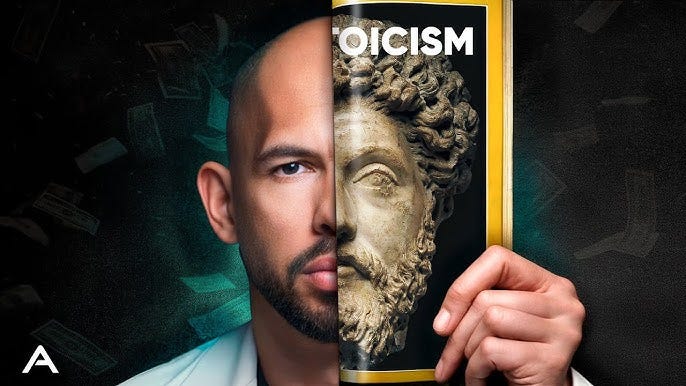
The resurgence of Stoicism in contemporary culture has sparked a debate about its authenticity and purpose. Once a profound philosophical tradition aimed at guiding individuals toward a virtuous life, Stoicism has been co-opted and commercialized, leading many to view it as a mere money-making scheme. This article explores how Stoicism transformed from ancient wisdom into a modern self-help trend, often stripped of its core teachings.
The Historical Roots of Stoicism
Stoicism originated in ancient Greece with Zeno of Citium, who, after losing everything in a shipwreck, developed a philosophy emphasizing emotional resilience and rationality. This idea resonated throughout history, with notable Stoics like Marcus Aurelius and Epictetus further shaping its principles. However, the philosophy largely faded from prominence after the rise of Christianity, only to experience a revival in the mid-20th century.
The Modern Resurgence
The revival of Stoicism can be linked to the development of cognitive behavioral therapy (CBT), which drew inspiration from Stoic principles. Figures like Albert Ellis and Aaron Beck integrated Stoic ideas into psychotherapy, leading to a renewed interest in the philosophy. However, the rise of the internet and social media has facilitated a shift in how Stoicism is perceived and practiced.
Commercialization and Simplification
As Stoicism gained traction, it became increasingly commercialized. Influencers and entrepreneurs began to package Stoic teachings as quick-fix solutions for success, reducing complex ideas to catchy quotes and superficial techniques. Ryan Holiday, a prominent figure in this movement, popularized Stoicism through his book The Obstacle Is the Way, which, while introducing many to Stoic concepts, also contributed to the commodification of the philosophy.
The Influence of the Manosphere
One of the most troubling developments in the modern interpretation of Stoicism is its appropriation by the manosphere — a collection of online communities promoting a specific, often toxic, brand of masculinity. This movement distorts Stoic teachings, emphasizing emotional suppression and a narrow definition of success. Critics argue that this interpretation undermines the original intent of Stoicism, which advocates for emotional awareness and the cultivation of virtue.

Conclusion: A Call for Authenticity
As Stoicism continues to be embraced in mainstream culture, it is essential for practitioners to engage with its core tenets. The true essence of Stoicism should not be lost in the noise of commercialization and superficiality. By fostering a deeper understanding of Stoic principles, we can ensure that this ancient wisdom remains a valuable guide for navigating the complexities of modern life, rather than a mere trend exploited for profit.In a world where ancient philosophies are often repackaged for commercial gain, discerning the genuine teachings of Stoicism from the noise of self-help culture is crucial for preserving its integrity and relevance.
Follow me on social for more tools and free resources!
LD: https://bit.ly/3X3izpw
IG: https://bit.ly/4dXtiZG
Fb: https://bit.ly/4dBDpU6
Page: https://bit.ly/3AE6jUX
YT: https://bit.ly/4g1OIGE
PT: https://bit.ly/3X1KWnV
TT: https://bit.ly/3AwhD5p
X: https://bit.ly/3YYhVfN
#StoicismScam #AncientWisdom #PhilosophyForProfit #ModernStoicism #SelfHelpTrend #CommercializedWisdom #PhilosophyHijacked #MindfulnessMarketing #StoicDeception #WisdomOrWealth #Mandalay #IntroductionToCommunicatoin #BodaylanguageReading #CommunicationThinking #AccessibleCommunication #NayzawTun #Myanmar #Arakan #Rakhine #Coach #Consultant #Trainer #Business #BusinessDoctor




No comments:
Post a Comment