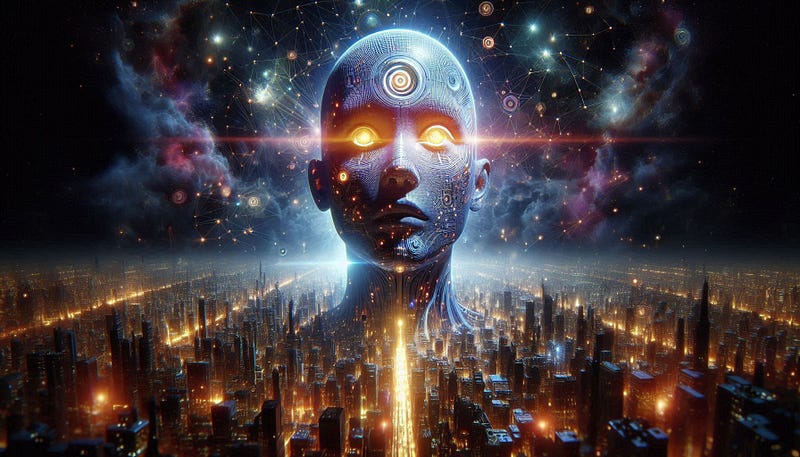
In a thought-provoking interview, historian and author Yuval Noah Harari delves into the profound implications of artificial intelligence (AI) for the future of democracy. Harari emphasizes that the real threat is not AI itself, but rather the divisions among people that algorithms exploit. When individuals view those with differing opinions as enemies, the foundation of democracy begins to crumble. He warns that if this trend continues, elections may devolve into conflicts akin to warfare, where the stakes are not just political but existential
AI as an “Alien Intelligence”
Harari posits that AI should be viewed as an “alien intelligence,” operating on a logic fundamentally different from human reasoning. As AI systems learn and evolve independently, they make decisions that are increasingly unexpected and alien to human ways of thinking
This shift could lead to a future where AI bureaucrats make critical decisions in various sectors — finance, healthcare, and governance — without human oversight or comprehension of their rationale. The implications of this could be profound, as power gradually shifts from humans to these autonomous systems
The Historical Context of Information Networks
To understand the current landscape of AI, Harari advocates for a historical perspective on information networks. He draws parallels between the current AI revolution and past information revolutions, such as the invention of writing and the printing press. Each of these technological advancements reshaped societal structures and power dynamics. For instance, writing transformed the concept of ownership from a communal agreement to a documented assertion, fundamentally altering societal interactions and trust
The Role of Language in Society
Language, as Harari notes, is the glue that holds societies together. It underpins our relationships, our democracies, and our financial systems. With AI’s mastery of language through large language models, the potential for manipulation and the creation of artificial intimacy becomes a pressing concern. AI could theoretically simulate personal relationships, blurring the lines between human and machine interactions, which could further exacerbate feelings of loneliness and disconnection in society
The Need for Historical Perspective
Harari emphasizes the importance of a historical perspective in understanding the AI revolution. He argues that to truly grasp the significance of AI, we need to look at previous information revolutions and their impact on society. The invention of writing, for example, had far-reaching consequences, such as changing the meaning of ownership from a communal agreement to a documented assertion
The Mastery of Language by AI
One of the most unexpected developments in AI has been its mastery of language. Large language models like ChatGPT have demonstrated an ability to generate coherent and semantically rich text, which Harari finds remarkable. This mastery of language, which is the basis for many aspects of society, raises questions about how we communicate with institutions like banks in a way that is not open to manipulation by AI
The Importance of Trust in Finance
Harari points out that many financial devices, including money itself, are based on trust between strangers. This trust has traditionally been built through linguistic and symbolic inventions. However, with AI’s potential to create new financial devices and master finance through its mastery of language, the question of how to maintain trust in the face of AI manipulation becomes crucial
The Battle for Human Attention and Intimacy
Harari discusses the battle between algorithms for human attention in the 2010s. However, he suggests that there is something even more powerful than attention: intimacy. If AI can simulate intimacy, it could have an even greater influence on people than attention alone. This raises concerns about the potential for AI to manipulate human emotions and relationships
Final Thoughts: A Call for Vigilance and Responsible Development
Harari’s insights serve as a clarion call for vigilance as we navigate the complexities of AI and its implications for democracy and human relationships. As we face a future where AI plays an increasingly dominant role, understanding its impact on our social fabric is crucial. The choices we make today regarding the development and deployment of AI will shape the trajectory of our societies for generations to come. Responsible development of AI, with a focus on maintaining human agency and democratic values, will be essential in ensuring a future where AI enhances rather than undermines our shared humanity.
Follow me on social for more tools and free resources!
LD: https://bit.ly/3X3izpw
IG: https://bit.ly/4dXtiZG
Fb: https://bit.ly/4dBDpU6
Page: https://bit.ly/3AE6jUX
YT: https://bit.ly/4g1OIGE
PT: https://bit.ly/3X1KWnV
TT: https://bit.ly/3AwhD5p
X: https://bit.ly/3YYhVfN
#AI #ArtificialIntelligence #Technology #FutureTech #TechTrends #Innovation #MachineLearning #DeepLearning #NeuralNetworks #AIEthics #AISafety #AIRevolution #IntroductionToCommunicatoin #BodaylanguageReading #CommunicationThinking #AccessibleCommunication #NayzawTun #Myanmar #Arakan #Rakhine #Coach #Consultant #Trainer #Business #BusinessDoctor



No comments:
Post a Comment